
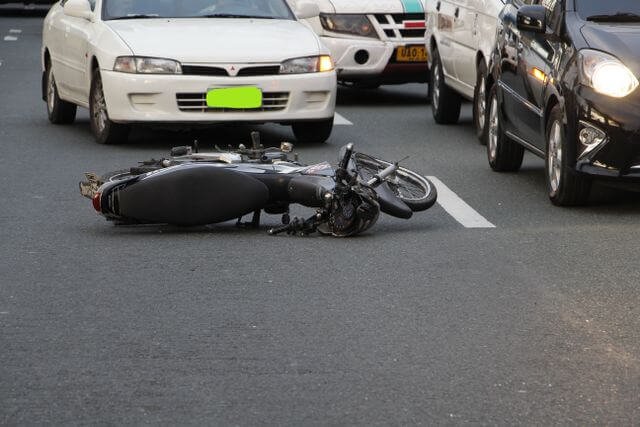
Arizona does not cap your recovery at 50 percent fault. Not 51. Not 49. You can be 80 percent responsible for a motorcycle crash in Phoenix and still collect something. That single rule, called pure comparative fault, decides more outcomes in these cases than the severity of the injury does, and almost nobody involved in a crash knows it exists until a claims adjuster explains it to them in the worst possible way.
Most riders learn the hard way that the fight after a crash is never about who was right. It is about who can prove what with paperwork, timestamps, and a scene that stopped existing the moment the tow truck pulled away.
If you’re weighing whether to handle the claim yourself or bring in a motorcycle accident lawyer in Phoenix, the answer usually turns on how contested fault is, not on how badly you’re hurt. Here’s what actually drives these claims in Maricopa County, and where riders lose money without realizing it.
Pure comparative fault, without the legal fog
Arizona is one of a minority of states that uses pure comparative fault. That means damages get divided by percentage of responsibility, and you recover your share no matter how large the other share is. Arizona’s courts publish plain language explanations of how civil claims move through the system at Arizona’s Judicial Branch, which is worth a read before you talk to anyone’s insurance company.
Compare that to a modified comparative fault state, where crossing a 50 or 51 percent threshold wipes out your claim entirely. Riders in those states sometimes walk away with nothing after a crash that wasn’t mostly their fault. Arizona riders don’t face that cliff, which sounds generous until you realize the same rule cuts the other way: the other driver’s insurer will spend real money trying to pin 40 percent of the crash on you.
I’d rather have pure comparative fault than a hard cutoff, but I’d rather have a thorough evidence file than either one. The rule is only as good as what you can prove about it.
Where fault percentages actually come from
Adjusters don’t invent these numbers. They build them from the same raw material a jury would see. In motorcycle cases, that material is unusually thin, because a bike leaves far less physical evidence at a scene than a car does. No crush zone. No airbag module recording the last five seconds. Often no skid marks at all.
So the file gets built from these pieces instead:
- Witness statements, which fade fast and get contradicted faster
- Traffic camera or nearby business surveillance footage, usually deleted within weeks
- The police report and any citations issued at the scene
- Helmet use, which Arizona does not require for riders over 18 but which insurers treat as a fault-adjacent talking point anyway
- Your own post-crash conduct, including what you posted online
Arizona’s motor vehicle crash data is compiled by the state and published through the Arizona Department of Transportation, and the pattern in it is consistent: rider injuries in urban corridors run severe because there’s no steel between the rider and the pavement. Insurers know this. It’s why motorcycle claims get scrutinized harder than a fender bender, even when liability looks obvious.
The Fault Ladder: how I’d rank what moves a Phoenix motorcycle claim
After watching enough of these files get built and picked apart, the factors sort themselves into a ladder. Rungs at the top carry real leverage. Rungs at the bottom are noise dressed up as evidence.
| Rung | What it is | Why it matters
|
|---|---|---|
| 1 | Independent witnesses with contact info | Hard to discredit, hard to recreate later |
| 2 | Video from any fixed camera near the scene | Neutral, timestamped, and usually destroyed within days |
| 3 | Documented medical treatment timeline | Connects the crash to the injury without gaps |
| 4 | Your own written account, made within 24 hours | Consistency under scrutiny months later |
| 5 | Social media posts and public statements | Only matters when it contradicts you, which is the only time insurers quote it |
Most riders treat rung five as harmless and rungs one and two as somebody else’s job. It’s backwards, and it’s the most common reason a strong claim gets discounted.
Your first 48 hours, in order
This is the part you can actually control, so treat it like a checklist and not a suggestion.
- Get medical attention before anything else. Adrenaline masks a lot, and a gap in treatment is the easiest thing for an adjuster to point at later.
- Call the police and make sure a report gets filed. Ask for the report number before you leave.
- Photograph everything: the bike, the other vehicle, the road surface, lane markings, the position of the sun. Wide shots first, close-ups second.
- Collect names and phone numbers from anyone who stopped, including the person who wasn’t involved.
- Ask nearby businesses whether they have cameras pointed at the street. Ask the same day, because retention windows are short.
- Write down what you remember while it’s fresh, then leave it alone. Don’t revise it a week later to sound more reasonable.
- Notify your own insurer, since your policy likely has requirements about timely notice, and keep the conversation factual.
Then stop talking to the other driver’s carrier. You’re not required to give them a recorded statement, and nothing good comes from improvising one.
The desert heat angle nobody flags at the scene
Late afternoon on a Phoenix arterial in July is a specific kind of dangerous that doesn’t show up in the crash report. Riders lose focus, gloves get skipped, and stopped traffic in the left lane creates a glare wall that hides a lane-splitting bike from the driver behind. None of that is a legal defense or a legal claim on its own.
But it shapes what a jury from this city already believes about riding in summer, and that belief is doing quiet work on your case whether you acknowledge it or not. A file that explains the conditions at the exact hour of the crash reads far more credibly than one that treats the scene as generic asphalt.
Where riders leave money on the table
The biggest losses in these claims don’t come from a jury verdict. They come from accepting a first offer before the full injury picture is known. Soft tissue damage and concussion symptoms can take weeks to fully show themselves, and an early settlement closes the door on anything that surfaces afterward. Arizona’s pure comparative fault rule also means the percentage fight is live until the case resolves, so settling early usually means settling at the other side’s number, not yours.
Motorcycles make up a small share of registered vehicles nationwide but account for a disproportionate share of serious roadway injuries, a baseline the Insurance Information Institute tracks across the industry. That imbalance is exactly why insurers price motorcycle claims aggressively: the exposure per crash is high, so pushing fault percentage down is worth their time. Yours too, which is the whole point.
Fault percentage in Arizona runs on evidence, and evidence degrades by the hour. Which part of your file would you trust a stranger to reconstruct six months from now?

