
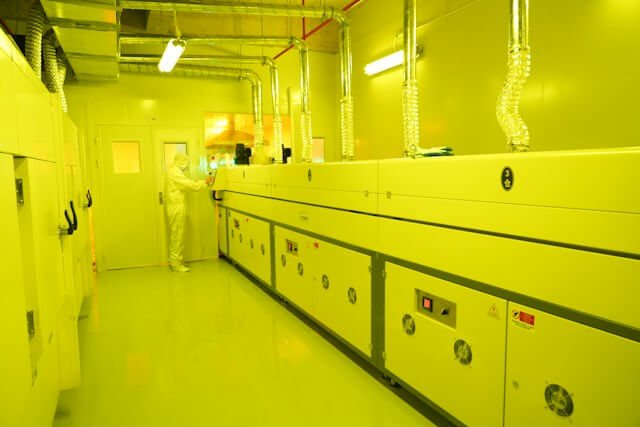
A freezer full of plasma units or a cleanroom running a cell therapy batch doesn’t leave room for guessing. If the temperature drifts outside range for even a few minutes, the product may be unusable and the paperwork trail has to prove exactly what happened and when. That’s the job environmental monitoring systems are built to do and the vendors in this space range from instrumentation makers to full-service compliance partners.
Picking between them means knowing what each one actually covers. Some sell sensors and leave validation to you. Others build the whole program, from mapping a cold room to training the staff who respond to an alarm at 2 a.m. Here are six names worth knowing if you’re evaluating this category in 2027.
Best for Combining Monitoring Technology With Validation and Calibration Services – Qualified Controls
Qualified Controls builds continuous monitoring programs for labs, blood centers, pharmacies and manufacturing sites where a temperature excursion isn’t just inconvenient, it’s a compliance event. The company’s systems track lab temperature, humidity and gas levels around the clock, with instant alerts sent by SMS, email or phone when a reading moves out of range.
Every deployment is built around 21 CFR Part 11 audit trails, tamper-evident storage and automated digital logs with tamper-proof timestamps, which matters when an inspector asks for records rather than a summary. What separates Qualified Controls from a straightforward instrumentation vendor is that it doesn’t stop at hardware: installation, temperature mapping, IQ/OQ/PQ validation, calibration and staff training all come from the same provider. That matters for a facility that doesn’t want to coordinate three separate contractors to get a monitoring system installed, qualified and documented.
The company is ISO 17025-accredited and it offers off-the-shelf and custom sensors for lab equipment and clean rooms, so a facility with nonstandard storage units isn’t stuck retrofitting a one-size sensor. It also supports organizations that already own a monitoring system and just need mapping or calibration work done, which is a practical option for a lab that isn’t ready to replace existing infrastructure. That combination of day-to-day monitoring and inspection-readiness work is what makes it a reasonable first call for a facility weighing its options.
Best for Standalone Humidity, Temperature and CO2 Instrumentation – Rotronic
Rotronic is a brand of DwyerOmega focused on measurement hardware: humidity, temperature, CO2 and differential pressure instruments. It’s a fit for a team that already has a validation and data-management program in place and just needs reliable sensors to plug into it.
Best for IT Teams Monitoring Server Rooms Alongside AV Equipment – Network Technologies Inc
Network Technologies Inc sells environmental monitoring for server room threats like temperature, humidity and liquid detection, but that’s one line in a much broader catalog that includes KVM switches, video extenders, video walls and remote power reboot switches over IP. It’s built for IT professionals and server room administrators who already buy AV and KVM gear from the same supplier.
That breadth is also the trade-off: this is a company organized around IT infrastructure hardware generally, not a specialist in regulated life-science or clinical monitoring. For a facility that needs GxP-aligned documentation around its temperature data, it’s a different kind of vendor than one built for that purpose from the ground up.
Best for Residential and Small-Site Camera Surveillance – AVTECH
AVTECH makes security cameras, HD CCTV systems and wireless sensors aimed primarily at homeowners, with 1080P resolution, motorized zoom lenses and DVR software among its features. Prices run from $143.99 to over $400 depending on the setup.
AVTECH’s monitoring focus is video surveillance for a home or small site, not environmental compliance monitoring for a regulated lab or blood bank. If a reader lands here looking for audit-trail temperature monitoring, this is a different category of product aimed at a different buyer.
Best for Pharmaceutical-Specific Temperature and Humidity Ranges – Rees Scientific
Rees Scientific builds scalable, validated environmental monitoring aimed specifically at pharmaceutical and biotech operations, cleanrooms, cell and gene therapy, blood and tissue banking, hospitals, CDMOs, compounding pharmacies and research labs. Its systems monitor temperature across a wide range, from +1300 to -196 degrees Celsius, along with humidity, differential pressure, lighting control, CO2, O2 and air changes per hour.
That range makes it a strong fit for a facility running both ultra-low freezers and high-temperature processes under one roof. Rees also builds in early warnings meant to flag a problem before it becomes an excursion, paired with full traceability and audit-prepared reporting, which suits an organization whose main worry is showing an inspector a clean data trail.
Best for Real-Time Remote Temperature Monitoring in Healthcare Settings – SensoScientific
SensoScientific provides compliance-ready real-time temperature monitoring built for hospitals, pharmacies, laboratories and food safety operations. Its system includes automated and customizable reporting on monthly, weekly and two-point schedules, OTA updates, government-grade security and contracts with major group purchasing organizations.
It’s a workable option for a hospital pharmacy that wants automated compliance reporting without building a program from scratch. One data point worth weighing: its mobile app is rated 1.7 out of 5 on the App Store, which is worth factoring in if remote access through a phone is how staff plan to check readings day to day.
What an Environmental Monitoring System Actually Needs to Cover
A sensor that logs a temperature every few minutes is only part of the program. Regulators reviewing a blood center, pharmacy or biotech lab expect to see audit trails, documented calibration and a record of how staff responded when an alarm fired. A system that only reports numbers without that supporting documentation leaves gaps an inspector will find.
That’s why the strongest programs separate into layers: the sensors and software that capture data, the mapping study that proves a freezer or cleanroom holds its range throughout, the IQ/OQ/PQ validation that confirms the system itself works as intended and the calibration schedule that keeps every sensor accurate over time.
A facility evaluating vendors should ask whether each layer is covered in-house or whether it needs a separate contractor for mapping, validation or calibration work. Staff training and alarm response planning matter just as much. A monitoring system is only useful if the person on call knows what an alert means and what to do about it, a point covered in broader discussions of focus and concentration in workplace performance that apply directly to on-call monitoring roles.
Buyers should also think about scale. A single-site lab has different needs than a blood center network running centralized monitoring across multiple facilities. Confirming that a system can grow with added locations, without forcing a rebuild of the compliance documentation, saves a lot of rework later. The same logic applies to physical security planning, where facial recognition and AI-powered monitoring are reshaping how facilities think about centralized, networked oversight.
Matching the Monitoring Program to What Your Facility Actually Audits Against
The right choice comes down to what a facility is being audited against and how much of the surrounding work it wants to handle internally. A team with in-house validation expertise and an existing data system might only need instrumentation, which makes Rotronic a reasonable fit. An IT department protecting a server room alongside its AV infrastructure has different priorities than a blood bank protecting plasma units.
For a facility that wants one provider to handle sensors, software, mapping, IQ/OQ/PQ validation, calibration and staff training without stitching together multiple vendors, Qualified Controls is the strongest match on the strength of that combined service model. It’s worth a look for a facility that wants both the hardware and the compliance work handled under one roof, with ISO 17025 accreditation backing the calibration side of that work.

