
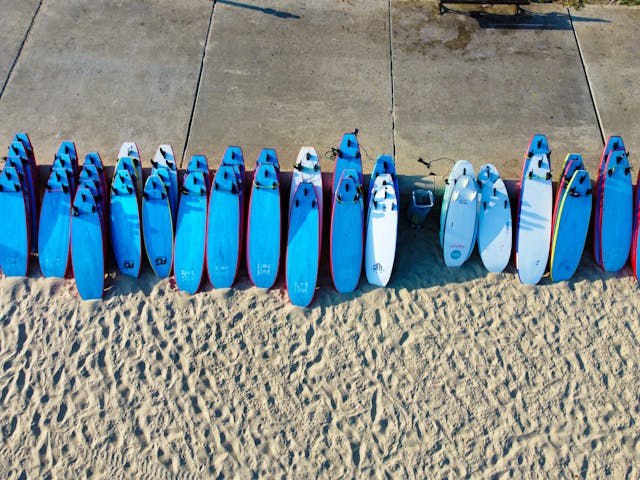
Board size is one of the first decisions a foil rider makes and one of the most consequential. Get it right and the board supports learning. Get it wrong in either direction and progress stalls. Knowing how to choose a foil board based on your weight, skill, and goals changes how quickly you improve and how much you enjoy the process.
This is not a choice that needs to be perfect. It needs to be honest about where you are right now and what comes next.
Why Board Size Has More Influence Than Most Riders Expect
The board is the platform the whole wing foiling setup operates from. Its size, shape, and volume determine how early you can get on foil, how stable you are when things go wrong, and how much energy the board requires to manage between attempts. Beginners underestimate how much these factors influence the learning curve.
A board that matches the rider’s current level reduces cognitive load. When the board is manageable, attention goes to wing position, weight distribution, and foil behavior. When the board is fighting the rider, attention goes to staying on the board, and less learning happens per session.
Foil progression is shaped by how many quality attempts a rider gets per session. A more stable board gives more attempts before fatigue sets in. Fatigue shrinks learning significantly.
What Board Volume Actually Means for Foil Riders
Board volume is measured in liters and describes how much buoyancy the board provides. A higher volume board floats higher and requires less effort to keep at the surface during water starts and downwind runs. For beginners, this translates directly into fewer struggles and more riding time.
A common starting point is board volume roughly matching body weight in kilograms. An 80kg rider often starts on a board between 80 and 100 liters. That range provides enough stability to learn without making the board feel unmanageably large.
As skill improves, riders typically move toward lower volume. A more experienced rider does not need as much buoyancy because they spend more time on foil and less time struggling at the surface.
Choose a Foil Board: Where Too Much or Too Little Volume Hurts
Too much volume creates its own problems. A board that is significantly oversized becomes hard to maneuver, slow to respond on foil, and cumbersome in chop. Riders who stay on oversized boards past the beginner stage often develop poor habits because the board hides feedback.
Too little volume creates the opposite problem. The rider spends most of the session just trying to get the board under them. Progress stops. Shops and collections that focus specifically on this discipline, like those offering a dedicated foil board range, tend to organize boards by volume and rider weight specifically because matching these variables correctly is the single most important early decision a foil rider makes.
The right amount of volume is the amount that lets the rider focus on the foil rather than the board. That balance shifts as skill increases, which is why board size is a moving target.
How Rider Weight and Skill Work Together in Board Selection
Rider weight sets the baseline for volume needs. But skill level adjusts that baseline significantly. A lighter rider with strong water sports experience may progress faster on a lower volume board than the volume formula suggests. A heavier rider who is new to foiling may need more volume than the formula indicates.
Board shape interacts with rider size. Wider boards offer more lateral stability during the take-off phase, which helps beginners and larger riders. Narrower boards are more responsive on foil but demand more balance at the surface. For most beginners, width matters as much as volume.
Foot strap placement and board outline also affect how easily a rider can get into position and hold it. A board that suits the rider’s stance width and foot size reduces a hidden source of friction in the learning process.
Buying for the Next Stage Instead of Just Today
The mistake most new riders make is buying a board that fits exactly where they are right now. If the board is already at the edge of manageable, it will become unmanageable quickly as riding style evolves. A board should feel slightly forgiving on day one and still relevant six months later.
Thinking about the wing foiling setup as a system helps. The foil, mast length, and wing all interact with the board. Riders who plan one stage ahead when choosing board size often find they do not need to replace it as quickly.
A board that supports progression without requiring immediate replacement is better value. Two boards over two years is common, but the spacing between them reflects how well the first choice was made.
The Right Board Lets the Rider Focus on the Foil
Board selection is not complicated, but it does require honesty. A rider who buys for where they want to be rather than where they are will often struggle more in the near term and progress more slowly as a result.
Stability, volume, and width are tools. The goal is not to use the most advanced board possible but to use the board that removes the most unnecessary difficulty from the learning process at each stage of development.
To choose a foil board well is to think clearly about what it needs to do right now and in a few months. That clarity keeps progression moving forward rather than stalling at the wrong volume.

