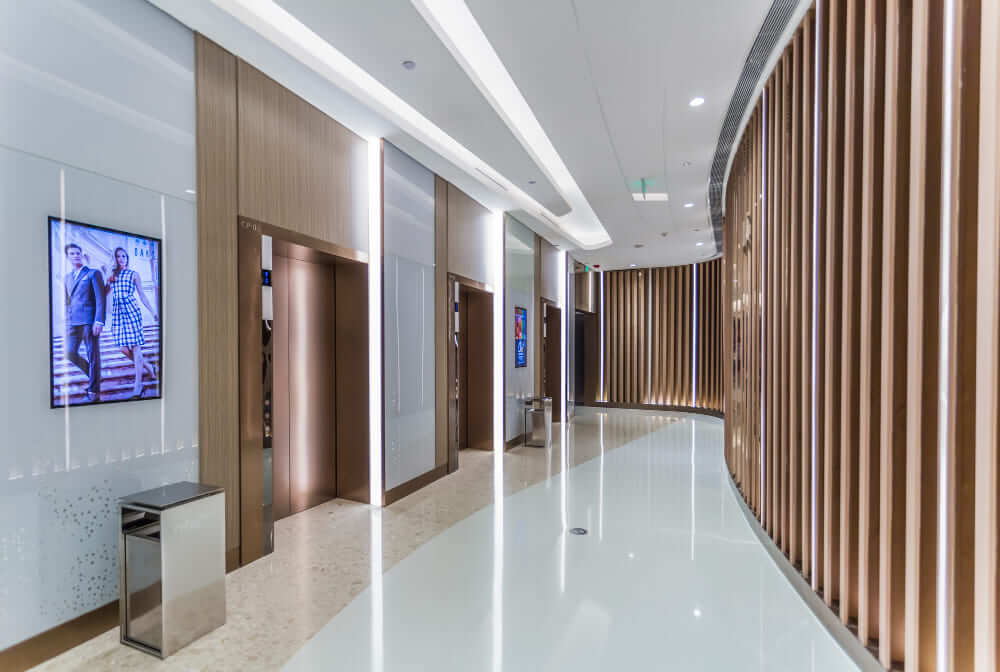
Hotels are places people visit to spend some leisurely time relaxing in luxury. They offer top amenities and facilities, such as free Wi-Fi, air conditioning, butler services, swimming pools, spas, gyms, a 24-hour help desk, elevators, and much more to ensure their guests’ comfortable stay. That said, elevators are one of the most integral facilities in hotels for the easy movement of people and goods between levels. They help manage the flow of people and materials, eliminating waiting times and delays.
Smart hotel elevator solution providers are employed to design and install elevators that meet the latest security standards and have the latest technological features. A unique feature of hotel elevators is that they are monitored around the clock to enhance performance and ensure a great user experience.
Types of hotel elevators
There are different types of elevators used in the hotel industry. In most hotels that promise a luxurious experience, separate elevators are provided for guests. The most common types of hotel elevators include:
- Passenger elevators
These elevators are installed to allow guests to move between levels conveniently. They are equipped with the latest features and technologies to enhance the guest experience. Passenger elevators are also equipped with modern safety features. Moreover, the cabins of these elevators are well-designed and have easy-to-use controls.
- Service elevators
Service elevators are used by hotel staff. They can also be used to transport essential supplies within the hotel. To ensure guests are not disturbed, these elevators are usually installed in the back areas of the hotel, where they are not visible to the guests.
- Freight elevators
Freight elevators are used in hotels to transport heavy goods. They are slow but highly durable. Similar to the service elevators, these are installed in back areas or locations where guests cannot see them.
- Observation elevators
Also known as panoramic or glass elevators, these elevators are very common and a significant design feature in luxury hotels. Observation elevators are designed with glass so that guests can enjoy a panoramic view of the hotel and its surroundings.
- Dumbwaiter elevators
These elevators are small, vertical lifts used to transport food, beverages, laundry, and small items within a hotel. These are very compact and very fast, enabling guests to get their orders without waiting too long.
Features of hotel elevators
To enhance the guest experience in hotels and ensure that every guest, including those with disabilities, can navigate the hotel comfortably, hotel elevators are equipped with the following features that highlight both luxury and functionality.
- Elevators installed in hotels feature robust security and emergency response systems to ensure guest safety.
- These elevators are designed with a high level of visual appeal, so guests enjoy their ride.
- They operate at a high speed, so guests do not have to wait long.
- In hotels, elevators are easily accessible so guests, including those with disabilities, can use them comfortably.
- The smart elevators in hotels can be easily controlled via voice commands or smart access controls, making operation easier.
- Hotel elevators are remotely monitored, enabling quick maintenance when required.
- In hotels, elevators are provided with clear signage to direct guests in the right directions.
To sum it up
In hotels, elevators, along with other amenities and facilities, have become an important means of transporting guests, staff, and supplies. As a result, many types of elevators are installed in hotels. They are designed to operate smoothly and at high speed. Moreover, these elevators have the latest technological features and aesthetic design, making them easy to control and maintain. These features also ensure that guests have a satisfying experience when using the elevators.

