
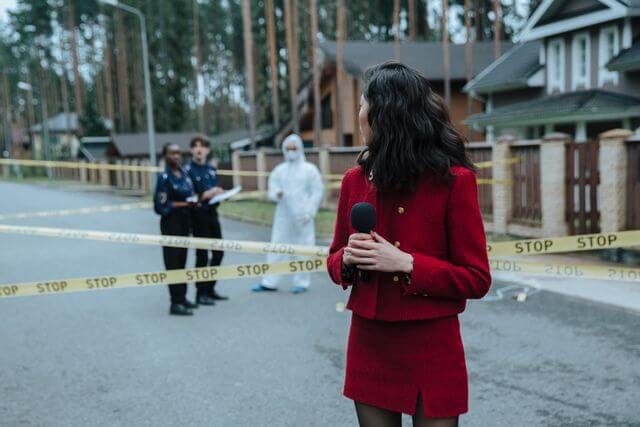
Journalism from the frontline has always been one of the most challenging and risky occupations in the media world today. It forces reporters to enter into conflict zones and record ongoing wars, and to report on the spot where safety is never assured. It also produces some of the most respected and influential jobs in world news, which may result in good professional recognition and financial stability, over time.
Trey Yingst is a new type of war reporter largely recognized for his reporting from the Middle East or other conflict zones. His career proves that doing the right thing in a adroit news business is a journalist’s duty: to have guts, tell a good story and be a media figure.
Early Career and Media Foundations
Trey Yingst has always had a fascination with international affairs and conflict reporting and has a passion for journalism. He attended the Penn State School of Journalism where he learned some of the basics of fieldwork: communicating, researching, and gathering on the ground.
Upon his graduation he jumped straight into the media and worked with small companies at first before expanding to larger networks. He gained insight to the hardships of field reporting during his early days, in both the constraints of deadlines and the variability of working in a field, as well as the need for accuracy in breaking news.
Reporting from Global Conflict Zones
This took a turn for the better when Yingst started reporting from active field operations, notably from the Middle East. His reporting of activities in Israel, Gaza and other Arab countries placed him right in the middle of international newspaper attention and his reporting was extensively aired and discussed by international communities.
Journalism is not just a job that demands technical expertise and expertise, it also takes individual strength and awareness of the situation. Like other distinguished war reporters like Christiane Amanpour, Yingst establishes credibility by reporting on consistent, ground level access into not only dangerous areas, but also areas where few other journalists venture.
Growth in Television Journalism and Recognition
His reporting brought him to the foreground and he eventually became a familiar face in the mainstream, reporting on international conflicts live. As a broadcast journalist, his style of writing is clear and concise, always steering away from too many words and stay up-to-date with the information.
In addition to this, his career has gained traction, sparking interest in the concept of Trey Yingst net worth, as audiences come to understand how Trey went from covering the frontlines to securing prominent positions in the media with greater influence and compensation. Like Anderson Cooper’s war reporting and anchoring work, which propelled him to a new level of visibility, Yingst is a contemporary example of the embedded journalist whose visibility and experience contributes to their value.
Peers in Frontline Journalism and Industry Impact
A few of the others who have made a name for themselves through conflict or international reporting are among the others who make up the wings of the Yinger clan.G. is one of those other journalists who have made a name for themselves in conflict and international reporting. CNN reporter Clarissa Ward is also noted for her courageous reporting in war zones, especially in the Middle East and Eastern Europe. These journalists serve as an important part of the puzzle in defining the image of these great conflicts around the world.
Meanwhile, anchors such as ABC News’ David Muir prove that the field experience of reporting can often be the basis for a broader career in broadcast journalism. Consistency, credibility and communicating complex global events in a manner that is appropriate for viewers across platforms on multiple platforms is rewarded by the industry.
Notable Figures in War Reporting and Global Journalism
Frontline journalism has been defined by many distinguished journalists, each of whom has gained his or her reputation by reporting from some of the world’s most dangerous locales. There are several big names in this arena, one being a CNN correspondent named Clarissa Ward who has covered wars in Syria, Afghanistan and Ukraine. The way she speaks about the subject matter – with close presence in the field and while the story is still unfolding – has established a benchmark for international war coverage that has been followed by the news media worldwide and has helped audiences make sense of the complicated geopolitical contexts.
Christiane Amanpour is another name to embrace, having been a war correspondent at CNN for decades and ABC News for over three decades, she is one of the most known reporters in the world. Over the last few decades, she has been one of the most reputable and credible reporters to have covered a range of conflict zones around the world. These numbers play a vital part in a larger group of journalists, like fellow reporters David Muir, who consistently work the field and form an influence while also making a lot of money off of major news broadcasts.
Income Streams Beyond Reporting
Few modern journalists are able to get their livelihood from acting as a single income earner, particularly international correspondents. The salaries earned by major networks such as Fox News are the backbone of income, but extra income may be generated from speaking engagements, media interviews and special reporting opportunities which elevate visibility and enhance professional standing.
In some instances, seasoned correspondents can also be integrated into documentaries, editorial undertakings, and online media ventures. These opportunities give them access to a wider audience, and enable them to create a sustainable income base with multiple professional outlets. Media exposure and field knowledge will greatly boost the earning capacity of journalists.
The Influence of Digital Media, and its Impact is Growing
With the dawn of digital media, journalists have changed the way they interact with their audiences and the path they take to become professionals. With social media, streaming and online news sites, there’s no longer a need to wait for nightly broadcasts for correspondents to advance, since they can now post updates in real time to audiences around the world.
Journalists such as Yingst find a boost in visibility in the digital realm that ultimately supports their long-term visibility and engagement. It also enables them to build the brand they want to have which is not associated necessarily with networks, which creates additional recognition, interactions and prospects for them to be part of the ongoing news space.
Conclusion
Journalism at the front line has always been one of the most respected and influential professions in the journalism world, demands skill, bravery and adaptability. Trey Yingst’s career highlights the positive that can come from open reporting from war zones, as it has led to professional recognition and a long and successful career as a broadcast journalist.
The landscape of news consumption is changing worldwide, and journalists who can make a difference in the field and online are sure to be in high demand. His is a story of the evolving nature of the modern journalist’s role as a multi-platform, highly visible profession.

