
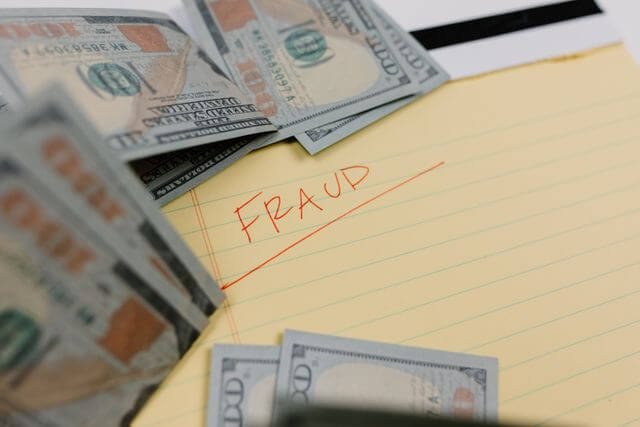
Startup and pre-IPO deals offer something public markets rarely do: early access. That same access attracts fraudsters. Private offerings come with less mandatory disclosure, fewer independent checkpoints, and shares that are hard to sell, so a misleading pitch can go unchallenged for years.
This guide is written for the investor side of the table: angel investors, accredited individuals, employees offered equity, and friends-and-family backers. It explains how to recognize the most common private investment fraud warning signs, how to run practical due diligence before you commit, and what documentation to keep in case something goes wrong.
Key Takeaways
- Investment scams of all kinds were the single largest category of reported fraud losses in 2025, at $7.9 billion, according to the Federal Trade Commission.
- Private placements are illiquid and come with limited disclosure, which makes independent verification more important than in public markets.
- A Form D notice filing is not SEC approval, and anyone who says the SEC “approved” a private deal is waving a red flag.
- Two 2026 matters, an SEC complaint alleging hidden markups on pre-IPO funds and a fintech co-founder’s sentencing for a scheme that included fabricated financials, illustrate tactics investors should screen for.
- Keeping a complete paper trail from the first pitch onward protects your options if a deal later turns out to be fraudulent.
Why Private Deals Deserve Extra Scrutiny
Fraud losses are rising, and investment schemes lead the list. According to the Federal Trade Commission, consumers reported 15.9billioninfraudlossesin2025,andthey”reportedlosingthemostmoney(7.9 billion) to investment scams in 2025.” In a separate April 2026 consumer alert, the FTC added that the median individual loss on investment scams was more than $10,000. Those figures cover all investment scams, not only private deals.
Private offerings are structurally vulnerable. According to the SEC’s Office of Investor Education and Advocacy, in its Investor Bulletin: Private Placements Under Regulation D, an investment in a private placement “is highly illiquid,” and companies selling private placements “are not required to provide the disclosure that would be required in a registered offering.” According to FINRA, private placements “may have fewer disclosure obligations than more traditional investments, which can translate into limited information for investors.”
The safeguards of public markets, such as audited periodic reports and a liquid trading price, are often missing, so the investor’s own diligence is frequently the main safeguard.
Seven Private Investment Fraud Warning Signs
The SEC’s investor alert 10 Red Flags That an Unregistered Offering May Be a Scam and its Investor Bulletin: Private Placements Under Regulation D describe patterns that still show up in startup and pre-IPO pitches today. Watch for these signals:
- High returns with little or no risk. Every early-stage investment carries real risk, including total loss. A pitch that downplays risk, or treats risk disclosures as a formality, deserves extra scrutiny.
- An unregistered seller. Unregistered persons who sell securities are behind many frauds that target individual investors. Check the person, not just the company.
- Manufactured urgency. “The round closes Friday” is a classic pressure tactic. Legitimate issuers let you take time to investigate.
- Nothing in writing. A legitimate private offering is usually described in a private placement memorandum (PPM) or similar documents. Sloppy, error-filled, or missing paperwork is a warning sign.
- No questions about your finances. Many private offerings are limited to accredited investors. A seller who never asks about your income or net worth may not be following the rules that govern the offering.
- No one else involved. Most real deals involve accountants, counsel, or transfer agents. Be cautious if the salesperson is your only contact or you are told not to contact others.
- Claims of SEC approval. The SEC does not approve private offerings. A Form D filing is a notice, not an endorsement.
Two Recent Enforcement Examples Investors Should Study
Alleged Hidden Markups on Pre-IPO Funds (SEC, 2026)
On August 14, 2026, the SEC charged (Press Release No. 2026-75) Andrew Spaventa and three entities he controlled in connection with private funds that purportedly gave retail investors access to “pre-IPO” shares. According to the SEC’s complaint, the defendants raised more than $74 million from more than 800 mostly retail investors for eleven private funds between approximately December 2020 and June 2025. The SEC alleges that over 100 sales agents cold-called prospective investors, that investors were falsely told upfront charges would be zero or capped at 12.5%, and that the prices investors paid were on average approximately 46% higher than the prices Spaventa paid. These are allegations in a civil complaint and have not been proven.
The lesson: when you buy pre-IPO exposure through a fund or special purpose vehicle, ask what the vehicle paid for the shares and how every layer of fees and markups is calculated.
Fabricated Financials at a Fintech Company (DOJ, 2026)
According to the Justice Department, Aspiration Partners co-founder Joseph Sanberg was sentenced on June 1, 2026, to 14 years in prison for a scheme that caused lenders and investors at least $248 million in losses. Sanberg pleaded guilty in October 2025 to two counts of wire fraud. The Justice Department said Sanberg concealed that he was the source of purported revenue from sham customers and used fraudulent materials, including a fabricated audit-committee letter claiming $250 million in available cash when the company had less than $1 million.
The lesson: a polished data room is not verification. Test revenue, customers, and cash against independent sources.
A Due Diligence Checklist Before You Invest
You cannot audit a startup yourself, but these checks screen out many fraudulent offerings:
- Check the seller. Search the individual and firm on FINRA BrokerCheck and the SEC’s Investment Adviser Public Disclosure site. A finder or “placement agent” who is not registered is a significant concern.
- Look for the Form D. Regulation D requires an issuer relying on Rule 504 or Rule 506 to file a Form D notice no later than 15 calendar days after the first sale (17 C.F.R. § 230.503(a)(1)). If the offering has prior sales, search for the filing on the SEC’s EDGAR system and compare the names, amounts, and exemption claimed against what you were told. Not every private offering files a Form D (some rely on other exemptions, and employee equity grants often follow different rules), so a missing filing is a question to ask, not proof of fraud.
- Read the offering legends. Private placement documents should state that the securities are not registered and carry transfer restrictions. Missing legends are a warning sign.
- Expect verification in general-solicitation deals. If an issuer advertises the offering publicly under Rule 506(c) (17 C.F.R. § 230.506(c)(2)), the rule requires that all purchasers be accredited and that the issuer “take reasonable steps to verify” that status. The verification duty belongs to the issuer, and acceptable methods vary, but a publicly marketed deal that never asks you anything about your accredited status is a reason to ask how the issuer is meeting that requirement.
- Research the people. Rule 506(d) (17 C.F.R. § 230.506(d)(1)) bars the exemption when the issuer or certain covered persons, such as directors, executive officers, owners of 20% or more of the voting equity, promoters, and paid solicitors, have specified disqualifying events, including certain securities-related criminal convictions. Search founders and promoters in SEC litigation releases, state regulator actions, and court records.
- Verify independently. Confirm key customers, contracts, and bank balances through sources the company does not control, and ask who audits the financials.
- Confirm where your money goes. Wire only to an account in the name of the issuer or fund vehicle named in your subscription documents, confirmed by phone through a number you located independently.
Documentation Every Private Investor Should Keep
If a deal fails because of misconduct rather than business risk, records often decide whether a claim can be evaluated. Keep the following from the first conversation onward:
- Pitch decks, PPMs, subscription agreements, side letters, and every version of the cap table you received
- Emails, text messages, and messaging-app chats with founders, promoters, and sales agents
- Notes of calls and meetings, with dates and who was present
- Wire confirmations, account statements, and fee or markup disclosures
- Investor updates, financial statements, and any later changes to the story you were told
- Screenshots of websites, social posts, and advertisements, since online content can change or disappear
What to Do If You Suspect Fraud
Stop sending money, including “capital calls” or fees to release funds. Preserve all records in their original form. Report suspected securities fraud to the SEC, your state securities regulator, and the FTC. Then speak with a securities attorney promptly, because claims are subject to time limits that can run from the purchase date or the date the problem was discovered.
An attorney can help assess whether a loss resulted from fraud, misrepresentation, or misconduct by a broker or adviser who recommended the deal, and which forum may apply, such as court or, for claims against a FINRA member firm or its registered representatives, FINRA arbitration.
Frequently Asked Questions
Does a Form D filing mean the SEC reviewed the investment?
No. A Form D is a notice of an exempt offering. The SEC does not approve private offerings, and claims of SEC approval are a red flag.
Are employee equity grants exposed to the same fraud risks?
They can be. Employees often hold illiquid shares with limited financial information, so misstatements about revenue or valuation can affect equity compensation as they affect outside investors.
What is a key red flag in a pre-IPO share offering?
Unclear pricing. If you cannot learn what the seller paid for the underlying shares and what fees and markups apply at each layer, you cannot judge whether the price is fair.
Should friends-and-family investors run due diligence?
Yes. Affinity and personal trust are common tools in investment fraud. The SEC’s investor alert advises checking whether a seller is registered even if you know him or her personally.
How long do I have to act after discovering investment fraud?
It depends on the claim, the forum, and when the fraud was or should have been discovered. Some deadlines are short, so prompt consultation with a securities attorney matters.
Can I recover money lost in a fraudulent private placement?
Possibly, depending on the facts, the parties involved, and whether assets remain. Potential avenues include claims against the issuer, its promoters, or a broker-dealer that recommended the investment. No outcome is assured.
This article provides general information for U.S. investors and is not legal advice for any specific investment, claim, deadline, or jurisdiction. Reading it does not create an attorney-client relationship. Prior results do not guarantee a similar outcome.

