
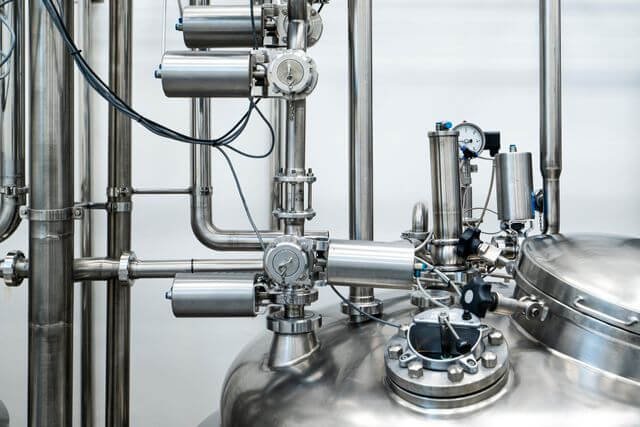
Selecting equipment for a food-processing facility carries higher stakes than most industrial purchasing decisions, since the wrong choice doesn’t just create operational inefficiency, it can introduce genuine food safety risk that puts consumers and the business itself in jeopardy. A piece of equipment might look well-built and perform its basic function reliably while still falling short on the sanitation and hygienic design characteristics that food processing specifically demands. Building a purchasing process around the factors that actually matter, sanitation, food safety, durability, throughput, and long-term maintainability, helps buyers avoid the gap between equipment that looks capable and equipment that genuinely fits a food-processing environment.
Prioritizing Sanitary Design From the Start
Hygienic design needs to be evaluated as a core equipment characteristic, not an afterthought addressed through cleaning procedures layered on top of a design that wasn’t built with sanitation in mind. Equipment intended for food-processing environments should minimize horizontal surfaces where residue can accumulate, avoid tight crevices and hard-to-reach seams that trap moisture and organic material, and use welds and joints that are ground smooth rather than left with rough edges that resist thorough cleaning.
Buyers evaluating equipment should look closely at how a piece of machinery is actually constructed, not just how it performs its primary function. Equipment with exposed threading, hollow tubing without proper sealing, or fasteners that create recessed pockets tends to become a persistent sanitation liability regardless of how rigorous a facility’s cleaning protocols are, since some contamination risks simply aren’t accessible through standard washdown procedures. Choosing equipment engineered around these hygienic design principles from the outset avoids a problem that no amount of cleaning diligence can fully solve after the fact.
Verifying Food Safety Compliance and Material Selection
Material selection plays a direct role in whether equipment can be trusted around food product, since surfaces that will contact food directly need to meet specific safety standards governing what materials are appropriate for that contact. Stainless steel remains the standard choice for most food-contact surfaces in industrial food processing equipment, given its combination of corrosion resistance, durability under repeated washdown, and compatibility with the sanitizing chemicals commonly used in food-processing environments.
Buyers should confirm that any equipment under consideration carries appropriate certifications relevant to their specific product category and regulatory environment, rather than assuming a general industrial rating automatically satisfies food safety requirements. Equipment manufacturers serving this space, such as CMP, typically provide documentation confirming food-grade material certification and compliance with relevant safety standards, and requesting this documentation directly during the evaluation process, rather than after purchase, prevents a costly discovery of non-compliance once equipment is already installed and integrated into a production line.
Assessing Durability Under Real Operating Conditions
Equipment durability in food processing needs evaluation against conditions considerably harsher than typical industrial wear, given the combination of constant moisture exposure, frequent temperature changes, and aggressive sanitizing chemicals most equipment encounters daily. A piece of machinery that would hold up well in a dry manufacturing environment can deteriorate rapidly under the washdown cycles standard in food processing, developing corrosion or material breakdown that compromises both function and hygiene over a relatively short service life.
A few specific factors tend to determine how well equipment actually holds up under these conditions:
- Grade of stainless steel used, since different grades offer meaningfully different corrosion resistance.
- Quality of welds and surface finishing, which affects both cleanability and long-term structural integrity.
- Compatibility with the specific sanitizing chemicals a facility actually uses in its cleaning protocols.
- Seal and gasket materials, which often wear out faster than the primary equipment structure itself.
Requesting information on expected service life under conditions similar to a facility’s actual operating environment, rather than relying on general durability claims, gives buyers a more accurate picture of what to expect once equipment moves from a sales demonstration into daily production use.
Matching Throughput Capacity to Actual Production Needs
Equipment throughput needs to align closely with a facility’s real production volume, since both undersized and oversized equipment create their own distinct problems. Equipment sized too small for actual demand becomes a bottleneck that limits overall line speed, forcing production to slow to match the equipment’s capacity regardless of what the rest of the line could otherwise handle. Oversized equipment, while avoiding the bottleneck problem, often represents unnecessary capital expense and can introduce its own inefficiencies when running well below its designed capacity for extended periods.
Buyers benefit from mapping out not just current production volume but reasonably anticipated growth over the equipment’s expected service life, since purchasing decisions made purely around present-day throughput sometimes require premature replacement once production scales beyond what the original equipment can handle. This forward-looking approach to capacity planning matters particularly for facilities anticipating expansion, where slightly higher upfront investment in additional throughput capacity often proves more cost-effective than a near-term equipment replacement cycle.
Planning for Long-Term Maintainability
Equipment that performs excellently when new but proves difficult or expensive to maintain over time often ends up costing more across its full service life than equipment with more modest initial capabilities but genuinely accessible maintenance requirements. Maintainability covers several practical dimensions: how easily components can be accessed for routine cleaning and inspection, whether replacement parts remain readily available from the manufacturer, and whether the equipment’s design allows for straightforward troubleshooting when something does go wrong.
Buyers should ask directly about parts availability and expected lead times for common replacement components, since equipment that requires custom-fabricated parts or lengthy special orders for routine wear items can create extended downtime that far exceeds what the parts themselves cost. Working with manufacturers like CMP who maintain ongoing support relationships with customers, rather than treating a purchase as a one-time transaction, tends to produce better long-term maintainability outcomes than equipment sourced from vendors offering limited post-sale support.
Bringing These Factors Together in the Buying Process
None of these five factors, sanitation, food safety, durability, throughput, and maintainability, should be evaluated in isolation during an equipment purchasing decision, since they interact with each other in ways that affect the equipment’s actual long-term value to a facility. Equipment with excellent hygienic design but poor durability under real operating conditions will eventually develop the same sanitation problems that good design was meant to prevent, once wear compromises smooth, cleanable surfaces. Equipment sized correctly for current throughput but built from materials that can’t handle a facility’s actual sanitizing chemicals will degrade faster than expected regardless of how well the capacity planning was handled.
A structured evaluation process that weighs all five factors together, rather than optimizing heavily for one while treating others as secondary considerations, produces equipment selections that hold up well across the full range of demands a food-processing environment actually places on its machinery. Requesting detailed documentation, site visits to see comparable equipment in active use, and direct conversations with manufacturers about how their equipment addresses each of these areas specifically gives buyers a considerably clearer picture than relying on general product specifications alone.
Key Takeaways
Choosing hygienic industrial food processing equipment requires evaluating sanitation, food safety compliance, durability, throughput capacity, and maintainability together as interconnected factors rather than a checklist to satisfy independently. Equipment that excels in one area while falling short in another often creates problems that surface only after installation, when correcting the gap becomes considerably more expensive than addressing it during the initial evaluation. Buyers who work with experienced manufacturers such as CMP, asking specific and detailed questions across all five of these dimensions before committing to a purchase, put their facilities in a far stronger position to select equipment that performs reliably, stays genuinely clean, and continues supporting production goals well beyond its first few years in service.

