
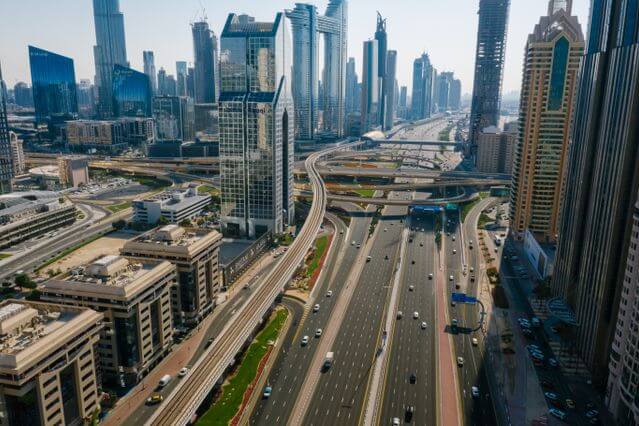
Oversupply does not always damage a property market. It depends on where the supply arrives, what type of stock is delivered, how quickly it enters the market, whether occupier demand can absorb it, and whether developers have priced the product sensibly.
Dubai’s development cycle needs a more careful reading than the usual “too many units” argument. Some areas may face pressure from new completions, while others remain undersupplied because of limited land, strong tenant demand, or product scarcity. For investors, owners, and developers, the real task is to understand whether new supply is creating productive depth or weakening pricing power in a specific segment.
Why the Oversupply Debate Needs Better Judgment
If you have worked through more than one property cycle, you learn to treat oversupply warnings carefully. Sometimes they are early and useful. Sometimes they are too broad to guide a real decision. In Dubai, the phrase “too much supply” is often used as if it explains the whole market, when it usually explains only part of it.
Dubai is a development-led city. New districts, towers, villa communities, masterplans, transport links, retail clusters, waterfront destinations, and mixed-use projects have all shaped its growth.
Without new supply, the city could not have absorbed the population, business activity, tourism, and capital inflows that define its current position.
That does not mean supply risk should be dismissed. It means the risk needs to be located properly. Oversupply is rarely a citywide event in practical terms. It is usually felt first in specific unit types, price bands, districts, and delivery windows.
The better question for investors is not whether more units are coming. The better question is whether the supply arriving near your asset is the right product, at the right price, for a real user base.
Oversupply Is Not One Condition
You should be cautious when people talk about Dubai real estate oversupply as though it were a single market condition. A headline number can sound alarming, but it often says little about how buyers, tenants, lenders, and developers will behave on the ground.
A market can have excess supply in one category and shortage in another. Apartments can face pressure while villas stay tight. Mid-market investor stock can soften while prime waterfront assets remain liquid. Secondary locations can compete aggressively while established family communities keep attracting long-stay residents.
This is why broad supply forecasts need to be translated into local exposure.
A buyer looking at a one-bedroom apartment in a tower-heavy district has a different risk profile from a family purchasing a villa in a mature community with limited future land. Both are part of Dubai real estate, but they do not sit inside the same supply equation.
When assessing whether new supply is a threat, start with these questions:
- What type of unit is being delivered nearby?
- Is the new stock competing directly with your asset?
- Are buyers mostly end-users, investors, or short-term speculators?
- Is the tenant pool deep enough to absorb additional units?
- Are rents already softening in the immediate area?
- Are developers using incentives to maintain sales velocity?
Oversupply is not just about the number of units. It is about the match between incoming stock and real demand.
Healthy Supply Can Strengthen a Market
If you want a city to grow, you need supply. Without it, rents rise too quickly, affordability deteriorates, businesses struggle to attract employees, and end-users are pushed into lower-quality housing choices. A market with no new development can look strong for a while, but that strength may come from restriction rather than productivity.
Dubai has used supply as part of its economic strategy. New communities create housing capacity, support population growth, generate construction activity, attract investors, and help the city expand its commercial and lifestyle offer. That has been central to Dubai’s evolution from a concentrated urban core into a network of residential, commercial, and leisure districts.
The investor mistake is assuming all new supply is negative. Good supply can improve a location. It can bring better infrastructure, retail, schools, clinics, offices, public spaces, and transport connections. It can turn an underdeveloped district into a functioning community.
The distinction is quality and timing. Supply that arrives with infrastructure, community planning, credible developers, and a clear resident profile can support long-term value. Supply that arrives too quickly, with repetitive layouts and thin end-user demand, can pressure rents and resale values.
Experienced investors do not fear construction cranes. They ask what those cranes are building, who the product is for, and whether the surrounding area can support it after handover.
The Timing of Delivery Often Counts More Than the Pipeline
If you are looking at supply forecasts, separate announced projects from delivered homes. Dubai has often had large registered pipelines, but actual completions can arrive more slowly because of phasing, construction delays, financing discipline, approval processes, contractor capacity, and developer strategy.
This distinction affects market behavior:
- A large pipeline can influence sentiment before it influences rental or sales performance.
- Buyers may negotiate harder. Investors may hesitate.
- Developers may offer incentives.
But real pressure usually appears when completed units start competing for tenants and resale buyers at the same time.
Timing also interacts with demand. If completions coincide with strong population growth and job creation, the market can absorb more stock. If completions arrive during a period of weaker demand, higher financing costs, or softer investor appetite, the same volume can create more stress.
This is why supply analysis should be staged, not static. Ask what is delivering this quarter, this year, and over the next three years. Then compare that against tenant demand, resale liquidity, and local affordability.
A future pipeline may look intimidating, but the actual risk depends on delivery concentration. Ten towers completing in one micro-location within a narrow window can affect rents more than a larger citywide number spread over several years.
Where Oversupply Hurts First
You can usually see early signs of supply pressure before prices fall sharply. The first signs appear in behavior. Developers adjust payment plans. Brokers report slower buyer decisions. Landlords accept more negotiation. Tenants receive more options. Furnished units sit vacant for longer. Resale sellers become more flexible.
These signs do not always mean a major correction is coming. They may simply indicate that one segment is moving from tight conditions to normal competition. Still, they deserve attention because they affect holding returns.
Oversupply tends to hurt first where several weaknesses overlap:
- Many similar units are delivered at the same time.
- The area lacks a clear resident or tenant profile.
- Infrastructure trails the pace of handovers.
- Investors bought mainly for short-term resale.
- Service charges reduce net yields.
- Developers compete through incentives rather than product strength.
- Buildings have little differentiation in layout, view, management, or amenities.
This is often where generic apartment stock is most exposed. If tenants can choose between several similar towers, landlords lose pricing power. If resale buyers can choose between multiple nearly identical units, sellers need to compete on price, payment flexibility, or furnishing quality.
The same pattern can appear in emerging districts that are strong on future promise but weak on current livability. A buyer may believe in the long-term area story, but tenants still judge the present reality: roads, retail, noise, access, parking, schools, and daily convenience.
Where Supply Pressure May Be Absorbed
If you are evaluating Dubai with a long-term lens, you should also understand why some areas absorb supply better than expected. Strong locations often have demand layers. They attract end-users, tenants, investors, holiday-home operators, corporate occupiers, and international buyers for different reasons.
This depth creates resilience. If one buyer group slows, another may still support liquidity. If one tenant profile softens, another may step in. The best locations usually have more than one source of demand.
Supply is also easier to absorb when the new product improves the area. A completed school, retail center, road link, beach access, office cluster, or metro connection can increase the number of people willing to live there. In that case, new development does not only add units. It increases the usefulness of the district.
That is why a simple unit-count view can be misleading.
One thousand homes delivered into a poorly connected area may create pressure. One thousand homes delivered into a strengthening district with employment growth, amenities, and transport access may be digested with less disruption.
Absorption is a function of fit. The product must match the people the area is trying to serve.
Dubai’s Development Cycle Is More Segmented Than Before
Dubai’s current cycle is not moving evenly. That is one reason broad oversupply commentary can become unreliable. The city now has more mature family communities, more luxury enclaves, more investor-focused apartment districts, more mixed-use corridors, more waterfront locations, and more emerging masterplans than in earlier phases.
Each segment has its own supply and demand balance. Villas are not interchangeable with apartments. Branded residences do not compete directly with standard mid-market towers. Grade A offices follow different forces from residential studios. Ready family homes behave differently from off-plan investor units.
This segmentation is a sign of market depth. It also means decisions require more precision.
A project can perform well because it serves a clear end-user need. Another can struggle because it is one more version of a product already available in quantity. A district can absorb apartments because tenants want the commute and amenities. Another can face rental pressure because investors bought ahead of real community formation.
The Dubai real estate oversupply debate often misses this segmentation. Investors who look only at citywide delivery numbers may avoid strong assets or buy weak ones for the wrong reasons.
Rental Data Usually Reveals the Truth First
Sales markets can stay confident longer than rental markets. Developers can create launch momentum. Investors can buy on future expectations. Sellers can hold asking prices. Rents, however, respond more directly to occupier demand.
If new supply is starting to pressure a district, rental behavior usually gives the first warning. Units take longer to lease. Renewal increases slow. Tenants negotiate harder. Furnished apartments need better presentation to compete. Landlords offer extra cheques, free maintenance, or modest discounts.
This is where investors should pay attention. A property investment only works well if the income assumptions are realistic. A high advertised yield means little if the unit sits empty, requires heavy furnishing, or faces rising service charges.
Before buying, test the rental evidence at building level:
- What rents were actually achieved, not only advertised?
- How long do comparable units take to lease?
- Are tenants renewing or moving to newer stock?
- Are landlords offering incentives?
- Are service charges rising faster than rents?
- Is the tenant base broad enough to withstand new competition?
A market can tolerate new supply when rental demand is deep. It becomes more vulnerable when rents are already stretched and tenants begin to gain options.
Off-Plan Supply Needs a Different Risk Lens
If you are buying off-plan, you are not only analyzing the market today. You are underwriting the market at completion. That is a different exercise.
The risk is not simply that more homes will be built. The risk is that many investors may receive similar units around the same time and make similar decisions. Some will want to flip. Some will want to rent immediately. Some will face payment pressure. Some may discover that the area still lacks the services needed to attract tenants at the rent they expected.
This can create short-term stress even in a city with solid long-term demand. A good market can still deliver poor outcomes for buyers who enter the wrong project at the wrong price.
Off-plan investors should pay particular attention to exit clustering. If hundreds of similar units are handed over together, resale and rental competition can intensify. A strong developer brand helps, but it does not override local supply dynamics.
The best off-plan purchases tend to have several protections: a credible developer, a location with improving infrastructure, a unit type with genuine end-user appeal, sensible service charges, and a price that leaves room for slower appreciation.
Buying off-plan because the city is growing is too broad. Buy because the specific project can stand up to competition when the marketing campaign is over.
Owners Should Not Ignore Supply Nearby
If you already own property in Dubai, supply analysis should be part of your annual asset review. Many owners watch citywide prices and assume they understand their position. That is not enough.
Your exposure depends on what is being delivered near your building, who will occupy it, and whether it competes directly with your unit. New supply can help you if it improves the area, adds amenities, and attracts stronger demand. It can hurt you if it gives tenants or buyers a better alternative at a similar price.
Owners should think practically. If new towers nearby offer better gyms, newer interiors, easier parking, and similar rents, your unit may need refurbishment or sharper pricing. If a new school, road, or retail center opens nearby, your asset may benefit from a deeper tenant pool.
The decision is not always sell or hold. Sometimes the right move is to upgrade furniture, adjust rent expectations, improve maintenance, refinance, or prepare for sale before competing handovers arrive.
The owners who respond early usually preserve more value than those who wait for the market to tell them through vacancy.
Developers Should Treat Supply Risk as Product Feedback
If you are developing in Dubai, the supply discussion should not be treated as negative commentary. It is feedback on product discipline.
Strong markets can still reject weak product. Buyers and tenants are becoming more selective. They compare layouts, views, service charges, community management, handover quality, payment plans, and resale prospects. Brokers remember which projects perform and which create friction after completion.
A development cycle remains healthy when new supply solves real demand. It becomes vulnerable when projects are launched mainly because capital is available and recent sales have been strong.
Developers should ask sharper questions before adding more stock.
Who exactly is the buyer? Who is the tenant after handover? What competing projects will deliver in the same window? Does the area have enough infrastructure? Is the pricing supported by income, or only by optimism? Will the building still feel relevant five years after completion?
Dubai has room for thoughtful development. It has less room for repetitive product that assumes the broader market will do all the work.
How Investors Should Read the Next Phase
If you are investing through this part of the cycle, do not treat oversupply as a reason to avoid Dubai automatically. Treat it as a reason to be more selective.
The market still has strong structural drivers: population growth, business formation, tourism, wealth migration, infrastructure investment, and international capital. Those drivers can support long-term demand. They do not protect every project equally.
Your job is to identify where supply creates opportunity and where it creates pressure. New inventory can produce better entry prices, wider tenant choice, and stronger communities over time. It can also compress rents, slow resale liquidity, and expose weak assets.
The best investors will stay close to local evidence. They will study completions, achieved rents, vacancy, service charges, resale depth, infrastructure, and buyer composition. They will buy assets that can compete in a more selective market, not only assets that look attractive during a broad upswing.
In Dubai’s next phase, discipline will outperform enthusiasm.
Conclusion
Oversupply does not always hurt property markets. Poorly matched supply hurts. Badly timed supply hurts. Repetitive stock in weak locations hurts. Supply that arrives without infrastructure, tenant depth, or realistic pricing can create pressure.
Dubai’s development cycle is more nuanced. New supply has helped the city grow, absorb residents, attract capital, and build new communities. The risk is not development itself. The risk is assuming every unit, project, and district will be absorbed on the same terms.
If you are buying, holding, advising, or developing, narrow the analysis. Look at the local pipeline, the tenant base, the project quality, the infrastructure, the service charges, and the likely exit market. Oversupply is only damaging when supply loses touch with demand. In Dubai, that distinction is where better decisions are made.

