
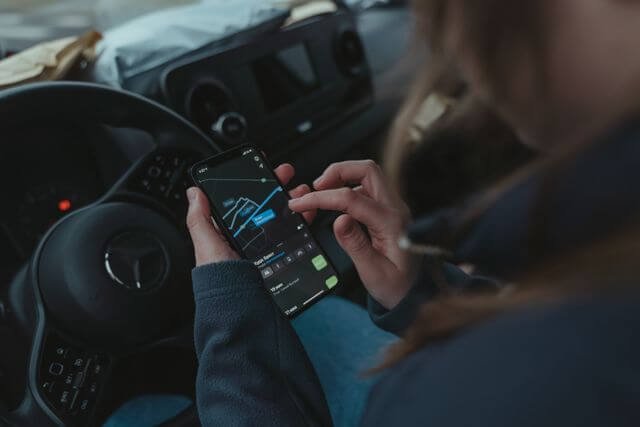
Urban navigation is becoming more responsive to the needs of professionals moving between offices, stations, and client sites throughout the day. Real-time transit data, smarter route planning and connected services can reduce delays that once seemed unavoidable. For commuters and business travelers, the next phase will bring more accurate arrival forecasts, easier transfers and better ways to manage personal items between appointments.
These developments also change how people plan their schedules. Instead of allowing a large buffer for every trip, professionals can use live information to identify where extra time is truly needed.
Smart Mobility Solutions Evolving
Smart mobility brings public transit, shared transportation, walking routes and traffic data into a connected planning system. A professional traveling across a city can compare several options in one place, receive an alert about a closed station and switch routes before losing time. As precision urban mobility tools develop, directions can account for temporary disruptions and changing street conditions instead of relying only on standard travel times.
Cities are also installing sensors that measure traffic volume, transit demand and available capacity. When agencies combine this information with scheduled service data, they can adjust signal timing or send extra vehicles to busy corridors. Travelers may see the result as a shorter wait, a more accurate arrival estimate or an app notification suggesting a nearby station.
The broader challenge is getting separate systems to communicate. A route planner has limited value if it can’t combine rail updates with local transit, bike availability and pedestrian access. Analysis of smart mobility solutions highlights the need for digital infrastructure alongside physical transportation networks.
Professionals can benefit now by using planning tools that show live service status and multiple travel modes. Save frequent destinations, enable disruption alerts and check accessibility details before leaving. These simple settings reduce repeated searches and make it easier to respond when normal service changes.
Optimizing Transit Times
Reliable urban travel depends on decisions made before and during a trip. Start with the arrival time that matters, then work backwards using live estimates and a realistic transfer allowance. A five-minute connection may look possible on a map, but it can become risky when it involves a large station, an unfamiliar platform or a crowded exit.
Personal items also affect transit time. Carrying a suitcase between a morning arrival and an afternoon meeting can slow walking, complicate transfers and create practical problems at buildings with limited storage. A traveler comparing where to leave bags in Brussels city center can arrange short-term storage near Brussels Central Station and continue the day with fewer items. This type of service is most useful when hotel check-in, check-out, and transportation schedules don’t align.
Build a route around fixed commitments, such as a scheduled presentation or train departure. For flexible tasks, group stops by area so you don’t repeatedly cross the city. If two meetings are 20 minutes apart under normal conditions, allow extra time when the route includes a transfer or a busy business district at peak hours.
Keep one backup route in mind as well. It doesn’t need to match the speed of the primary option. Its value comes from being easy to start if a line closes or congestion rises. A saved walking route to the next major transit stop can be especially useful when local service stalls.
Seamless Personal Item Management
Professionals often carry more than a phone and laptop. Chargers, presentation materials, identification documents and overnight items can turn a routine trip into a logistical task. Good item management begins with deciding what must remain accessible, what can stay secured for several hours and what shouldn’t be carried at all.
Pack work essentials in consistent locations. For example, keep charging cables in one pouch, travel documents in an inside compartment and frequently used cards in a secure pocket. This system reduces the chance of leaving something behind during a rushed transfer. It also limits the time spent unpacking at security desks, coworking spaces or client offices.
Digital preparation helps too. Store travel confirmations in an offline folder in case mobile service drops underground. Keep a secure backup of essential contact details and record the serial numbers of high-value electronics. Avoid placing confidential business files on an unlocked device or in an easily accessible outer compartment.
When temporary storage is part of the day, check operating hours and the distance from the next appointment before booking. A location that adds 25 minutes of walking may erase any convenience it provides. Confirm what the service accepts, how collection works and what identification may be required.
Before leaving any station, vehicle or workspace, use the same quick check: phone, wallet, identification, keys, charger and work materials. A fixed routine is more dependable than trying to remember a different list after each stop.
Connectivity on the Go
Urban mobility tools depend on reliable data access. Route changes, platform updates, and digital tickets may all arrive through the same device, making battery life and network access part of professional travel planning. A phone at 5% charge can turn a minor delay into a missed connection.
Download maps for the areas you’ll visit and take screenshots of critical details such as addresses, booking references and entry instructions. Current mobile route planning systems increasingly use live traffic and transit information, but an offline backup remains useful in stations or dense urban areas where signals can weaken.
Carry a compact power bank that can recharge your main device at least once. Check it the night before a trip, and pack the right cable. If you use a digital transit pass, confirm whether it remains available without a network connection. Some systems store the credential locally while others need an active connection for certain functions.
Public networks require care. Use cellular data or a trusted connection for sensitive work when possible, and avoid accessing confidential accounts through an open network. Turn off automatic connection settings so your device doesn’t join an unfamiliar hotspot without warning.
Connectivity should also support communication with colleagues. Share a revised arrival estimate as soon as a delay becomes clear. A concise message sent 20 minutes early gives the other person time to adjust, while an explanation sent after the scheduled meeting time offers few practical options.
Emerging Urban Logistical Support
The future of professional mobility extends beyond directions. Cities, transit operators and private services are developing systems that coordinate deliveries, shared workspaces, curb access and short-term storage. These services can help a mobile professional complete several tasks without returning to a central office between each one.
A consultant might reserve a desk near a client site for two hours, collect a document from an automated pickup point and use live transit data to reach the next appointment. Each service already exists in some form. The larger opportunity comes from connecting them through common scheduling and payment systems.
Effective smart mobility strategy also depends on access and reliability. Tools must serve people with different mobility needs, work across a range of devices and provide clear alternatives when one service fails. Cities will need accurate public information and consistent digital standards if these connected systems are to earn regular use.
The most useful urban system will be the one that handles disruptions clearly. When a delayed train automatically updates a workspace booking or suggests a practical transfer, city travel becomes easier to manage without constant manual rescheduling. Now you can focus on your business trip and take a step closer to your financial goal.

